Speed Press: U.S. headlines

Top Searches: #6 Whitney Houston

Like Michael Jackson and Amy Winehouse before her, superstar Whitney Houston galvanized an online rush with her unexpected death on Feb. 11. The singer-actress, who had a well-chronicled drug addiction, had been missing in action for some time.

Olympic moments of 2012

On July 27, 2012, more than 200 nations gathered in Olympic Stadium in London for the start of the 2012 Olympic Games. For 17 days we watched as the world's top athletes competed in more than 30 sports -- running, swimming, rowing,

Best New Artists Of 2012: Swimming Pools, Cemetaries And Too Much Blood

As the year comes to a close, and the holiday stress puts your therapist on speed dial, why not take a moment from your debilitating rage against the department store cashier to reflect upon the last calendar .

Most Viral Photos: #9 Most retweeted Obama photo

The night of the election, as networks began calling the race for President Obama, his campaign tweeted this photo of the president and first lady Michelle Obama hugging with the caption .

Wonders in Space: #5 Space Jump

Extreme athlete Felix Baumgartner made history with his amazing space jump on Oct. 14. After floating to the edge of Earth's atmosphere in a balloon-lifted capsule, Baumgartner performed a record-breaking free-fall jump, covering 23 miles at 834 mph

Showing posts with label U.S. headlines. Show all posts

Tuesday, March 12, 2013

Wonders in Space: #5 Space Jump

Extreme athlete Felix Baumgartner made history with his amazing space jump on Oct. 14. After floating to the edge of Earth's atmosphere in a balloon-lifted capsule, Baumgartner performed a record-breaking free-fall jump, covering 23 miles at 834 mph before opening his parachute and dropping safely to terra firma. Baumgartner, who wanted to set a record and practiced five years for the jump, said he didn't enjoy the experience until his chute opened.
"When my parachute opened, this was the first moment where I enjoyed it a lot because I knew it was over and I'm alive,'' he said after the monumental leap.

Most Viral Photos: 9 Most retweeted Obama photo

The night of the election, as networks began calling the race for President Obama, his campaign tweeted this photo of the president and first lady Michelle Obama hugging with the caption "four more years." The photo captured the moment and became the most retweeted ever, even surpassing a previous tweet by…wait for it…Justin Bieber. The photo also became the "most liked" on Facebook, receiving over 4.4 million "likes" and counting. The shot, snapped in August by campaign photographer Scout Tufankjian, was taken at a campaign stop in Iowa. The two hadn't seen each other in a couple of days and embraced onstage. The rest is social media history. (Photo courtesy @BarackObama/Twitter)

Best New Artists Of 2012: Swimming Pools, Cemetaries And Too Much Blood

As the year comes to a close, and the holiday stress puts your therapist on speed dial, why not take a moment from your debilitating rage against the department store cashier to reflect upon the last calendar year of music—we sure have. 2012 has brought us tripped out folk singers, potty-mouthed mermaids, indie super groups and jams hot enough to boil a waterbed, just to name a few.

While some of these artists have been around for longer than a hot second, we're selecting them based on their debut studio or major label albums dropping in 2012. After all, how can you choose a "Best New Artist" without hearing a completed effort? So let’s take a look at the artists we think gave this year a real good shakedown.

Kendrick Lamar: Certainly not a new face to the game, but this year marks the beginning of Kendrick Lamar’s journey into the hip-hop stratos as a full-fledged star. Following in the footsteps of other Dre protégés like Eminem and Snoop Dogg , the LA-based artist’s first major label album good kid m.A.A.d city peaked at #2 in the US after having already worked with the top names in the industry. Lamar doesn’t need million-dollar cars and a mouth full of diamonds to blow you away; just a mic, a stage, and a moment of your time. This one will be around for a long time, trust.

Olympic moments of 2012


Song: "Champion" by The Chevin

On July 27, 2012, more than 200 nations gathered in Olympic Stadium in London for the start of the 2012 Olympic Games. For 17 days we watched as the world's top athletes competed in more than 30 sports -- running, swimming, rowing, tumbling, and fighting their way to gold. And if this year's Games showed us anything, it's that Yahoo! users couldn't get enough of the incredible stories that came out of the 2012 London Olympics.

Some of the most dramatic Olympic moments came from track & field events. We cheered on Jamaica's Usain Bolt, who proved he is the fastest man in the world, winning back-to-back gold medals in both the 100- and 200-meter dash and setting three world records while in London. We celebrated Allyson Felix's long-coveted win in the 200-meter dash, after two disappointing losses in 2004 and 2008. We were awed by Britain's "Golden Girl" Jessica Ennis, who took home gold in the heptathlon, to the elation of the London crowds. And we were inspired by Oscar Pistorius, aka "Blade Runner," the first double amputee to compete in the Olympic finals.

Women's gymnastics also held some of the most exciting Olympic moments for Yahoo! users this summer. For the first time in 16 years, the U.S. women's team, dubbed the "Fierce Five," took home the gold -- beating Russia decisively 183.596 to 178.530 in the team competition. And in a dramatic win, 16-year-old Gabrielle Douglas of the U.S. edged out Russia's Victoria Komova by only .259 points to win the women's all-around competition.

Besides incredible moments, the 2012 Olympics gave us something else: the most decorated athlete in the history of the Games. We held our breath as swimming great Michael Phelps missed the podium with his first race, the 400 individual medley. But Phelps proved he would live up to the moniker of "Greatest Olympian of All Time," winning four gold medals and two silvers in his subsequent races. His final tally? Twenty-two Olympic medals overall, the most in the history of the Games.

Video produced by Brad Williams and Evan Doherty. Article by Rebecca Resnick Driskill. Postproduction by Brad Williams. Graphics by Todd Tanner.


Top Searches: #6 Whitney Houston


Like Michael Jackson and Amy Winehouse before her, superstar Whitney Houston galvanized an online rush with her unexpected death on Feb. 11. The singer-actress, who had a well-chronicled drug addiction, had been missing in action for some time.

Yet with news of her death came reports that a long-promised comeback had been under way (notably, her first film role in 16 years), making her fatal accident ("drowning and effects of atherosclerotic heart disease and cocaine use") all the more heartbreaking. Death came 24 hours before her return performance at a pre-Grammy gala. The awards ceremony paid tribute to Houston the next day; at the time, her room at the Beverly Hilton was still considered a crime scene.

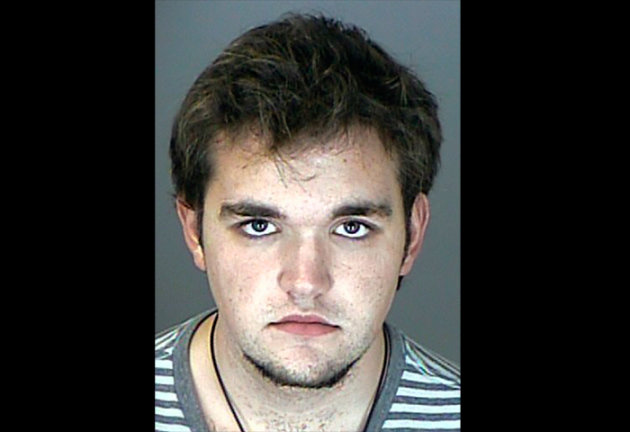
Teen suspect in Colo. girl killing to enter plea

GOLDEN, Colo. (AP) — The teen accused of kidnapping, killing and dismembering a 10-year-old Colorado girl is expected to plead guilty Tuesday to the horrific crime because he told police he knew what he did was wrong and he wanted to give his victim's family some level of comfort.
Austin Sigg is charged with murder, kidnapping and sexual assault in the Oct. 5 disappearance and slaying of Jessica Ridgeway in the Denver suburb of Westminster. The case led parents and school officials to take extraordinary precautions to keep children safe, and residents were encouraged to report suspicious behavior by neighbors.
Sigg, who turned 18 in January, cannot face the death penalty because he was 17 at the time of the slaying. He faces life in prison with the possibility of parole after 40 years if convicted.
While investigators testified that Sigg confessed to strangling Jessica and then dismembering her body in a bathtub, he vehemently denied sexually assaulting her. No semen was found on the girl's body, according to previous testimony in the case.
It's unclear whether prosecutors will drop the sexual assault charges in exchange for a guilty plea to murder in order to avoid a prolonged trial. Prosecutors added the sexual assault charges because authorities said they found child pornography during the investigation.
Prosecutors and defense attorneys won't comment on whether Sigg will plead guilty to all or some of the charges because a judge has issued a gag order in the case.
Sigg also is charged with an earlier attack on a runner in Jessica's neighborhood.
Jessica, a fifth-grade student, disappeared after she left her house to meet a friend just two blocks away so they could walk to school together. Her torso was discovered in a field in the nearby suburb of Arvada, while other remains were found at Sigg's mother's house after she called police.
At a Feb. 23 preliminary hearing, investigators presented 911 recordings in which Sigg told police, "I murdered Jessica Ridgeway. I have proof that I did it."
Westminster police officer Albert Stutson testified that Sigg told him during questioning that he planned to plead guilty. He asked officials if it would give Jessica's family comfort if he were held accountable. Stutson said Sigg told him "he knew what he did was wrong and that he would make up for it someday."
Officers testified that Sigg told them that some of Jessica's remains were hidden in a crawl space in the home of his mother, where he lived. They said Sigg also told them how he abducted Jessica as she walked past his car. He bound her arms and legs with zip ties, placed her in the back seat and took her to his house, where he strangled her, police said.
Hundreds of local, state and federal officers canvassed the Westminster area after Jessica's disappearance, investigating leads and even taking residents' DNA samples. Parents waited with their children at school bus stops or drove them to and from school. The FBI took the unusual step of asking residents to keep an eye out on neighbors — and even family members — and report suspicious behavior.
One resident contacted authorities Oct. 19 to alert them about Sigg because he had a fascination with death, Westminster detective Luis Lopez testified. Sigg was interested in a mortuary science program at a local community college, police said. Two FBI agents responded and took a DNA sample from Sigg on Oct. 19.
Mindy Sigg told investigator Michael Lynch that her son appeared sick and confessed four days after the FBI visit. He opened the conversation by saying he was a "monster," she said.
Mindy Sigg then called 911 to say her son wanted to turn himself in and had confessed to killing the girl. When the dispatcher asked what her son had said, Mindy Sigg replied, "That he did it, and he gave me details, and her remains are in my house."
Sigg also faces an attempted kidnapping charge for the attack on a 22-year-old woman who was running at a lake across the street from Jessica's elementary school. An investigator testified that Sigg used homemade chloroform concocted with a recipe found on the Internet to attempt to subdue the woman.
Jessica lived in Westminster with her mother, Sarah Ridgeway. Jessica's father, Jeremiah Bryant, lives in the Kansas City suburb of Independence, Mo.
___
Associated Press writer P. Solomon Banda contributed to this report.

The choreographed election of a pope in a nutshell

VATICAN CITY (AP) — The election of a pope follows a series of choreographed rules and rituals that have been tweaked over the centuries ever since the term "conclave" or "with a key" was used in the 13th century to describe the process of locking up the cardinals until they have chosen a new pope.
Here are the rules in use to elect the 266th pope:
___
WHO VOTES?
Only cardinals under age 80 are eligible; in this case 115 men fit the bill and will vote. Two cardinals who were eligible stayed home: The emeritus archbishop of Jakarta, Cardinal Julius Darmaatjadja, who is ill, and Scottish Cardinal Keith O'Brien, who recused himself after admitting to inappropriate sexual behavior.
___
WHAT IS THE RITUAL?
The conclave's first day begins with the "Pro eligendo Romano Pontificie" Mass for the election of a pope. In the afternoon, cardinals gather in the Pauline Chapel of the Apostolic Palace and file into the Sistine Chapel chanting the Litany of Saints and the Latin hymn "Veni Creator," imploring saints and the Holy Spirit to help them pick a pope.
Standing under Michelangelo's "Creation" and before his "Last Judgment," each cardinal places his hand on a book of the Gospels and pledges "with the greatest fidelity" never to reveal the details of the conclave. A meditation on the qualities needed for the next pope and the challenges ahead for the church is delivered by Maltese Cardinal Prosper Grech.
The master of liturgical celebrations then cries "Extra omnes," Latin for "all out." Everyone except the cardinals leaves and the voting can begin.
___
HOW DO THEY VOTE?
Each cardinal writes his choice on a paper inscribed with the words "Eligo in summen pontificem," or "I elect as Supreme Pontiff." They approach the altar one by one and say: "I call as my witness, Christ the Lord who will be my judge, that my vote is given to the one who, before God, I think should be elected."
The folded ballot is placed on a round plate and slid into an oval silver and gold urn. In the past, a single chalice was used to hold the ballots. But conclave changes made by Pope John Paul II in 1996 required three vessels: one for chapel ballots, another for ailing cardinals at the Vatican who can vote from their beds and the third to hold the ballots after counting. No cardinals are expected to require the bedside voting, but all three flying saucer-shaped urns were in the Sistine Chapel regardless.
Once cast, the ballots are opened one by one by three different "scrutineers," who note the names down and read them aloud. Cardinals can keep their own tally on a sheet of paper provided but must turn their notes in to be burned at the end of voting.
The scrutineers then add up the results of each round of balloting and write the results down on a separate sheet of paper which is preserved in the papal archives.
As the scrutineer reads out each name, he pierces each ballot with a needle through the word "Eligo" and binds the ballots with thread and ties a knot. The ballots are then put aside and burned in the chapel stove along with a chemical to produce either black or white smoke.
Up to four rounds of voting are allowed each day after the first day, and a two-thirds majority — 77 votes — is needed.
If no one is elected after three days — by Friday afternoon — voting pauses for up to one day. Voting resumes and if no pope is elected after another seven ballots, there is another pause, and so on until about 12 days of balloting have passed.
Under norms introduced by Benedict XVI just before he resigned, the cardinals then go to a runoff of the top two vote-getters. A two-thirds majority is required; neither of the two top candidates casts a ballot in the runoff.
__
WHAT HAPPENS ONCE THE POPE IS ELECTED?
Once a cardinal has been elected pope, the master of liturgical ceremonies enters the Sistine Chapel and the senior cardinal asks "Do you accept your canonical election as Supreme Pontiff?" Assuming the cardinal says "I accept," the senior cardinal then asks: "By what name do you wish to be called?" The master of liturgical ceremonies, Monsignor Guido Marini, then enters the information on a formal document.
At this point, white smoke pours out of the Sistine Chapel chimney and bells of St. Peters toll.
The new pope then changes into his papal white cassock, and one-by-one the cardinals approach him to swear their obedience.
In a change for this conclave, the new pope will stop and pray in the Pauline Chapel for a few minutes before emerging on the loggia of the balcony overlooking St. Peter's Square. Preceding him to the balcony is French Cardinal Jean-Louis Tauran, the protodeacon, who announces "Habemus Papam!" Latin for "We have a pope" and then introduces him to the world in Latin.
The new pope then emerges and delivers his first public words as pope.
___
FAMOUS FIRST WORDS?
Pope John Paul II charmed the crowd of thousands on Oct. 16, 1978 when he first emerged on the loggia, no easy task given his predecessor had only lived as pope for 33 days and Karol Wojtyla was the first non-Italian elected in 455 years.
Noting that he came from a far-away land — Poland — he told the crowd that he would speak in their ("our") language.
"If I make a mistake, you will correct me," he said to cheers.
Retired Pope Benedict XVI offered a similarly modest gesture on April 19, 2005, telling the crowd he was but a simple "humble worker in the vineyard of the Lord."
___
Follow Nicole Winfield at www.twitter.com/nwinfield

Teachers, staff rally, lobby at Texas Capitol


Teachers, education staffers rally at Texas Capitol, then fan out to lobby for public schools


AUSTIN, Texas (AP) -- About 1,000 teachers and education staffers from across Texas rallied at the state Capitol on Monday, urging the Legislature to reverse $5.4 billion in cuts to public schools approved two years ago.
As part of Texas American Federation of Teachers lobby day, union leaders encouraged educators to use their spring break to gather in Austin for the demonstration — which saw many participants in blue-and-white ATF T-shirts wave signs reading "Our Kids, Our Future."
Members of some high school percussion sections also turned out and the banging of their drums reverberated off the Capitol's pink facade as the House and Senate opened their sessions in the afternoon. Later, the crowd fanned out for meetings in the offices of individual lawmakers.
Sen. Wendy Davis, D-Fort Worth, said leading Democrats in the Texas Senate have called for spending $4 billion from the state's cash reserves, or Rainy Day Fund, to roll back the 2011 public education cuts. The fund is expected to grow to $11.8 billion by the end of 2015.
Referencing separate proposals to spend $2 billion from the fund to improve state water infrastructure and another $1 billion from it for highways and other roads, Davis urged demonstrators to remind lawmakers "that our school children are more important than any road, any water resource."
State Board of Education member Thomas Ratliff said he opposes high-profile proposals by Sen. Dan Patrick, the head of the Senate Education Committee who wants to expand "school choice."
Patrick and some other key conservatives support offering public money to low-income parents around the state so they can remove their kids from low-performing, traditional schools in favor of private and religious classrooms.
Ratliff, a Mt. Pleasant Republican, scoffed Monday at the notion that Texas youngsters are trapped in struggling schools simply because of where they live.
"They say they want to give them choices, they even called them trapped," Ratliff said of Patrick and others' assessments of students across Texas.
"I have news for you, they're not trapped," Ratliff continued. "They do have choices and they choose to stay in their local public schools."